

Plantalure
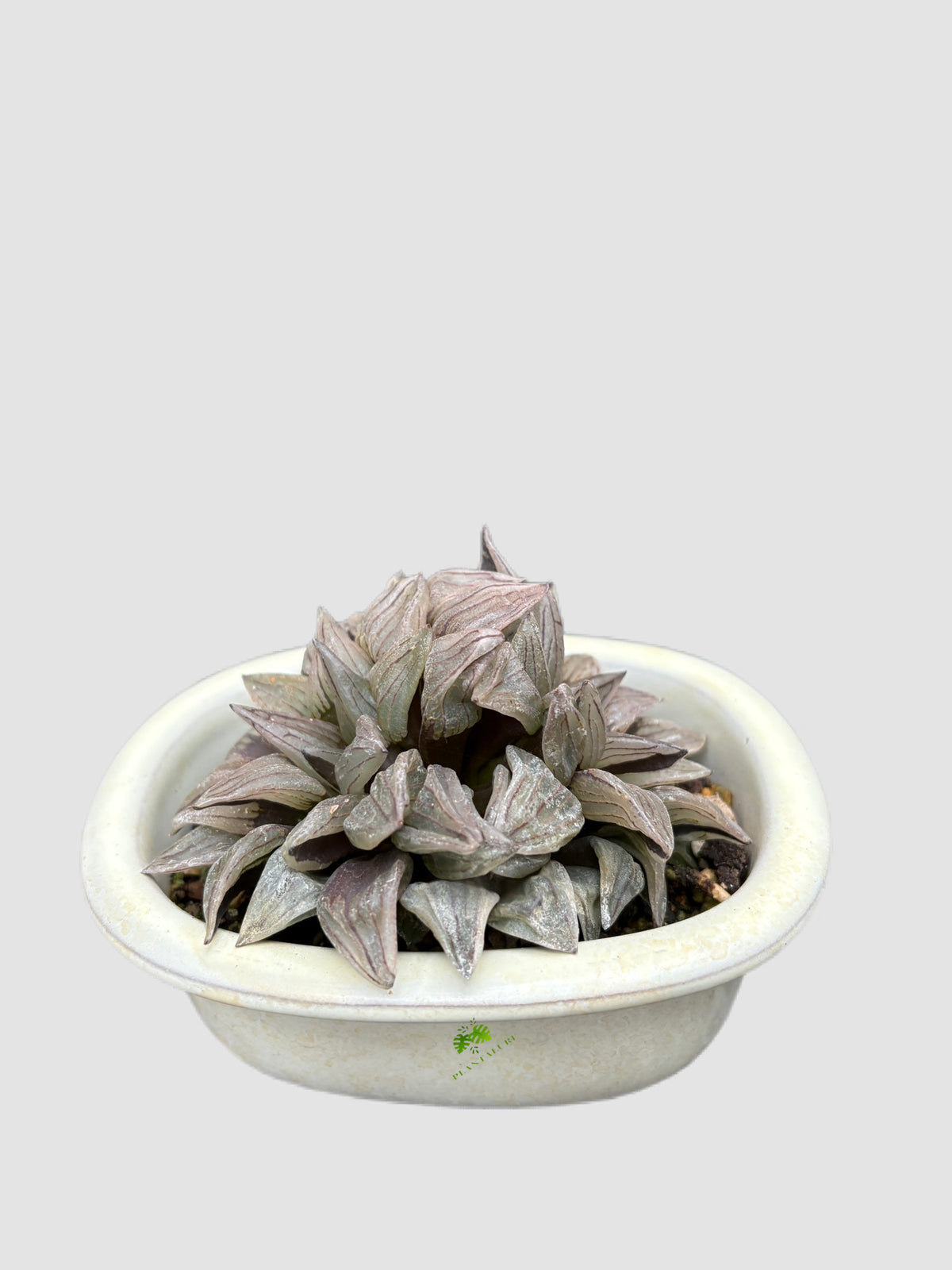
Haworthia Watermelon
Haworthia Watermelon
Couldn't load pickup availability
Haworthia Watermelon is a highly sought-after succulent prized for its translucent, jewel-like foliage and compact rosette growth habit. Named for its plump, windowed leaves that resemble glistening watermelon flesh, this captivating plant develops thick, rounded leaves that allow light to pass through their translucent tips, creating a beautiful glowing effect when viewed in bright light. Many plants sold as "Watermelon Haworthia" are forms or cultivars within the Haworthia cooperi or Haworthia obtusa group.
Its compact size, unique appearance, and easy-care nature have made Haworthia Watermelon a favorite among succulent collectors and houseplant enthusiasts alike. Over time, mature plants produce offsets that form attractive clusters, enhancing their ornamental appeal.
🌟 What Makes It Special:
✔ Jewel-Like Windowed Leaves – Translucent leaf tips create a beautiful glowing appearance in bright light.
✔ Compact Rosette Growth – Perfect for desks, shelves, windowsills, and succulent collections.
✔ Easy-Care Succulent – Adaptable and low-maintenance, ideal for beginners and collectors alike.
✔ Produces Offsets – Mature plants gradually form attractive clusters over time.
✔ Locally Grown & Acclimated – Established and actively growing in local conditions for a healthy transition into your home.
🌿 Growth Habit:
Haworthia Watermelon grows as a compact rosette of fleshy, translucent leaves. It thrives in bright, indirect light and appreciates a fast-draining succulent mix. Allow the growing medium to dry between waterings, as the plant stores moisture within its leaves. With proper care, it will gradually produce offsets and develop into a beautiful clustered specimen.
🧾 Please Note:
All photos are representative examples only. Each plant is naturally unique and may vary in size, shape, coloration, and leaf translucency. Foliage may develop subtle pink, bronze, or reddish tones when exposed to brighter light or mild environmental stress.
Share
Collapsible content
Plant Care Guide
Light
- Indoor Location: Place your plant on an east- or west-facing windowsill. A south-facing window is also excellent if you use a sheer curtain to diffuse the harshest rays.
- The Sweet Spot: It loves bright, filtered light. Too much direct midday sun will bleach or burn its delicate clear "windows." Too little light will cause the plant to lose its vibrant pink veins and stretch out.
- Prefers bright, indirect light.
- Can tolerate several hours of gentle morning sun.
- Avoid prolonged harsh afternoon sun, which may scorch the leaves.
- Insufficient light may cause stretching and loss of compact growth.
Water
- Allow the soil to dry completely between waterings.
- Water thoroughly, then let excess water drain away.
- Reduce watering during the winter months when growth slows.
- Overwatering is the most common cause of root rot.
Humidity
- Average household humidity is sufficient.
- Does not require additional humidity and prefers good air circulation.
Temperature
- Ideal temperature range: 18°C to 27°C.
- Protect from temperatures below 10°C.
- Keep away from cold drafts and sudden temperature fluctuations.
Soil
- Requires a fast-draining succulent mix.
- A blend containing pumice, perlite, coarse sand, or fine bark works well.
- Avoid dense soils that retain excess moisture.
Fertilizer
- Feed lightly during spring and summer with a diluted cactus or succulent fertilizer.
- Fertilize every 4 to 6 weeks during active growth.
- Do not fertilize during winter dormancy.
Growth Habit
- Slow-growing, compact rosette-forming succulent.
- Mature plants may produce offsets that can be separated and propagated.
- Typically remains small, making it ideal for windowsills, desks, and decorative planters.
Common Issues
- Soft, mushy leaves: Usually caused by overwatering.
- Wrinkled leaves: May indicate underwatering or root issues.
- Brown patches: Often the result of excessive direct sunlight.
- Pests: Occasionally susceptible to mealybugs and spider mites.
Pet Safety
- Haworthia species are generally considered non-toxic to cats and dogs. However, ingestion should still be discouraged.
With proper care, Haworthia Watermelon can thrive for many years and gradually form attractive clusters of textured, jewel-like rosettes.
Canada Wide Shipping
All orders are shipped within 1–2 business days, with delivery times of 1–5 days depending on your location. Each plant is carefully packaged to ensure safe arrival, with complimentary insulation and heat packs included during colder months for optimal protection. We ship exclusively with Purolator. If you are not home upon delivery, Purolator will take your package to a nearby facility and leave a notice — your plant will never be left at your door.
What to Expect
Each plant comes in its original nursery pot, which is typically 0.5–1 inch smaller than the listed size to ensure it fits neatly into a decorative pot of the same size.
As with all living things, each plant is unique. Natural variation in size, shape, and coloration is to be expected. We do our best to select a plant that closely matches the one shown on our website in the size you've chosen one that's healthy, beautiful, and ready to thrive in your home.
Winter Safe Packaging
We carefully monitor the destination weather for every order to ensure your plants arrive safely. When needed, complimentary heat packs and insulation are included to protect them from cold temperatures during transit.
Seasonal Care Tips
Winter— Canadian winters mean shorter daylight and dry indoor air from heating. If natural light is limited from November through February, a full-spectrum grow light on a 12-hour timer helps maintain healthy growth and prevents etiolation (stretching toward light). Water sparingly once soil begins to dry, keep away from heating vents and cold glass, and use a humidifier or pebble tray to maintain humidity. Keep plants comfortably above 15°C.
For a complete care guide, visit our Philodendron Care Guide →